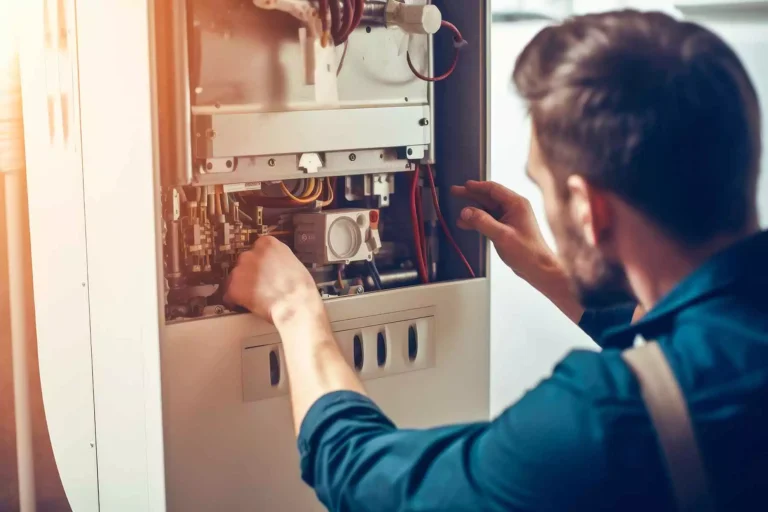

When your furnace or heat pump reaches the end of its service life, the signs tend to add up quickly. You notice uneven heating from room to room, hear strange noises during startup, or watch your energy bills climb month after month even though the equipment runs longer than it used to. In Forestbrook, SC, where winter mornings can turn sharply cold before mild afternoons, a heating system that struggles to keep pace is more than an inconvenience. It is a sign that heating replacement deserves serious consideration. At Conway Air Conditioning, we help homeowners work through this decision and carry out the replacement from start to finish.
Heating replacement is a bigger project than a repair, but it does not have to be stressful. The key is understanding what to expect at each stage, from the first assessment through the final system check. This page walks you through how we approach heating replacement in Forestbrook, the equipment options that suit our regional climate, and the technical details that separate a good installation from an average one.
Knowing When Replacement Makes More Sense Than Repair
Not every heating problem calls for a new system. A failed igniter, a bad capacitor, or a clogged filter can often be fixed for a modest cost. The question becomes more serious when the repairs start to stack up, or when a single repair approaches a large share of what a new unit would cost. As a general guide, once a furnace or heat pump passes the twelve to fifteen year mark and begins to fail regularly, replacement usually delivers better long-term value.
Efficiency is another factor worth weighing. Older heating equipment loses capacity over time, and the technology itself has advanced considerably. A heat pump manufactured today can move far more heat per unit of energy than a model from a decade or more ago. If your monthly bills have crept upward while your comfort has declined, a replacement system can often pay back part of its cost through lower operating expenses. Our technicians will always give you an honest assessment rather than pushing a replacement you do not need.
Our Heating Replacement Process Step by Step
We believe a smooth replacement starts with careful planning long before any equipment arrives. Rushing this stage leads to systems that are the wrong size, ductwork that leaks, and homeowners who never get the comfort they paid for. Here is how we manage each Forestbrook project from beginning to end.
- In-home assessment and load calculation: We measure your home, note insulation levels, count windows, and evaluate your existing ductwork before recommending anything. This lets us size the new system to your actual heating demand rather than guessing.
- Equipment selection: We review your options with you, explaining the trade-offs between heat pumps, gas furnaces, and dual-fuel setups so you can choose what fits your home and budget.
- Removal of the old system: We disconnect and haul away the old equipment safely, taking care to protect your floors, walls, and landscaping along the way.
- Installation of the new unit: Our team sets the new system, connects refrigerant lines or gas lines, wires the controls, and integrates the thermostat.
- Startup and testing: We charge the system, verify airflow, check temperature rise, and confirm every safety control works as designed before we consider the job complete.
Throughout the process, we keep you informed. You will know what is happening, why it matters, and how long each step should take. A typical residential heating replacement can often be completed in a single day, though larger homes or projects that involve ductwork modifications may take longer.
Choosing the Right Heating System for Forestbrook Homes
The coastal South Carolina climate shapes which heating systems make the most sense. Winters here are relatively mild compared with northern states, which makes the heat pump an especially strong choice. A heat pump provides both heating and cooling from a single system, and in our climate it spends most of the year operating in its most efficient range. For many Forestbrook households, a properly sized heat pump is the most economical way to stay warm through the cold months.
That said, some homeowners prefer the reliable output of a gas furnace, particularly during the occasional deep cold snap. A dual-fuel system pairs a heat pump with a gas furnace, letting the heat pump handle mild conditions while the furnace takes over when temperatures drop sharply. This arrangement gives you efficiency during ordinary weather and dependable heat when you need it most. During your assessment, we will explain which configuration matches your home, your comfort expectations, and your energy priorities.
Sizing matters just as much as the type of system. A unit that is too large will short-cycle, turning on and off repeatedly without properly dehumidifying or evenly heating your home. A unit that is too small will run constantly and still fall short on the coldest days. Our load calculations exist to prevent both problems, so the system you receive is matched to the real needs of your house.
Technical Details That Separate a Quality Installation
The equipment you buy is only part of the equation. Installation quality has an enormous effect on how well a heating system performs and how long it lasts. We pay close attention to details that some contractors overlook. Refrigerant charge, for example, must be set precisely to manufacturer specifications, because an overcharged or undercharged system loses efficiency and wears out its compressor prematurely.
Airflow is equally critical. We verify that your ductwork can deliver the volume of air the new system requires, and we seal leaks that would otherwise waste heated air in your attic or crawl space. Static pressure readings tell us whether the ducts are restricting flow, and temperature rise measurements confirm the furnace is operating within its designed range. These are the diagnostics that ensure your new system performs the way the manufacturer intended.
Our credentials reflect this commitment to doing the work correctly. Conway Air Conditioning employs NATE Certified Technicians and holds BPI (Building Performance Institute) certification, which means we understand how your heating equipment interacts with the whole house. As a Factory Authorized Dealer and a President’s Award winner, we install and service equipment to the standards the manufacturers demand.
Why Homeowners Across the Region Choose Us
We are a family owned and operated company, and we treat each home as if it were our own. Conway Air Conditioning is one of the oldest heating and air conditioning businesses in Conway, serving Horry County since the 1950s. That long history means we have seen how systems perform over decades in this specific climate, and we bring that experience to every replacement we carry out.
Beyond Forestbrook, we serve homeowners throughout Conway, Myrtle Beach, Red Hill, Bucksport, Aynor, Forestbrook, Socastee, Carolina Forest, Loris, and Garden City, SC with the same attention to detail and the same honest guidance. When you invest in a new heating system, you deserve a contractor who stands behind the work and remains available for maintenance and service in the years that follow. That is the relationship we aim to build with every customer.
If your heating system is showing its age or has already failed, reach out to Conway Air Conditioning to schedule an assessment. We will help you understand your options, size the right system for your home, and complete the replacement with the care and precision this important project deserves.